You're lying in bed and the boiler kicks in with a rumble you've never noticed before, or there's a gurgle from the cupboard every time the heating comes on, and you start wondering whether something's about to go or that's just what boilers do. Most of the time a boiler making noise comes down to one of four things: air in the system, scale or sludge building up in the heat exchanger, a pump on its way out, or, on a freezing morning, a blocked condensate pipe. A couple of those you can check yourself in ten minutes, one or two mean switching it off and getting someone out, and the sound itself is the best clue to which one you've got.
The sounds a healthy boiler makes anyway
A boiler that's working properly isn't silent. When the heating's on you'll often hear a soft whirr, which is the pump pushing water round the system. When the burner lights there's a low, steady roar, a bit like a gas hob turned up. You'll also get the odd click as the controls open and shut valves, and your pipes can tick or creak as they warm up and cool down again, because copper moves a little with the heat.
If what you're hearing is quiet, regular and sounds mechanical, it's probably normal. The noises worth paying attention to are the ones that are loud, irregular, new, or getting worse week by week. Ideal Heating's own advice says the same thing, and once you know what yours sounds like day to day, you'll notice straight away when something changes.
A rumble like a kettle coming to the boil
This one has a name in the trade, kettling, and it sounds exactly like it says, a rumbling, popping or knocking that builds as the boiler heats up. It's one of the most common boiler noises there is.
What's happening is that water isn't moving through the heat exchanger as freely as it should. Something has narrowed the way through, so the water sits too long over the burner, gets too hot in patches and starts to boil and steam inside the boiler. That something is usually one of two things. In hard water areas it's limescale, and if you've ever looked inside a kettle that's boiled hard water for a few years, you've seen it. It's the same chalky crust, only here it's coating the heat exchanger and leaving less and less room for the water to get through. In older systems it's often sludge, the black iron-oxide gunk that forms as steel radiators slowly rust from the inside, and that settles wherever the water slows down. A pump that isn't pushing hard enough can cause it too.
Kettling isn't a do-it-yourself job, and it doesn't clear up on its own. Depending on what's causing it, the fix might be cleaning or replacing the heat exchanger, or a chemical clean or power flush of the whole system to shift the sludge, followed by protecting the water so it doesn't build up again. If your radiators have also started going cold at the bottom, that points firmly at sludge rather than scale, and the two problems tend to get fixed together.
How hard your water is depends a lot on where you live, even within South Yorkshire. Our Rotherham page goes into why scale is more of a worry there than it is in Sheffield.
Gurgling, bubbling or the sound of running water
Gurgling usually means air. It gets into a heating system over time and collects in the radiators and pipework, and you can hear it moving about as the pump starts. A small amount of gurgling isn't unusual, but if it's become a regular thing, have a feel of your radiators when the heating's been on a while. One that's warm at the bottom and cold across the top has air trapped in it.
The other thing gurgling can point to is low pressure. Have a look at the pressure dial on the boiler. Cold, most systems are happy anywhere from 1 to 1.5 bar. If yours has dropped under 1, that's worth sorting before anything else. The article on a boiler losing pressure walks you through what the dial is telling you and when topping it up is fine.
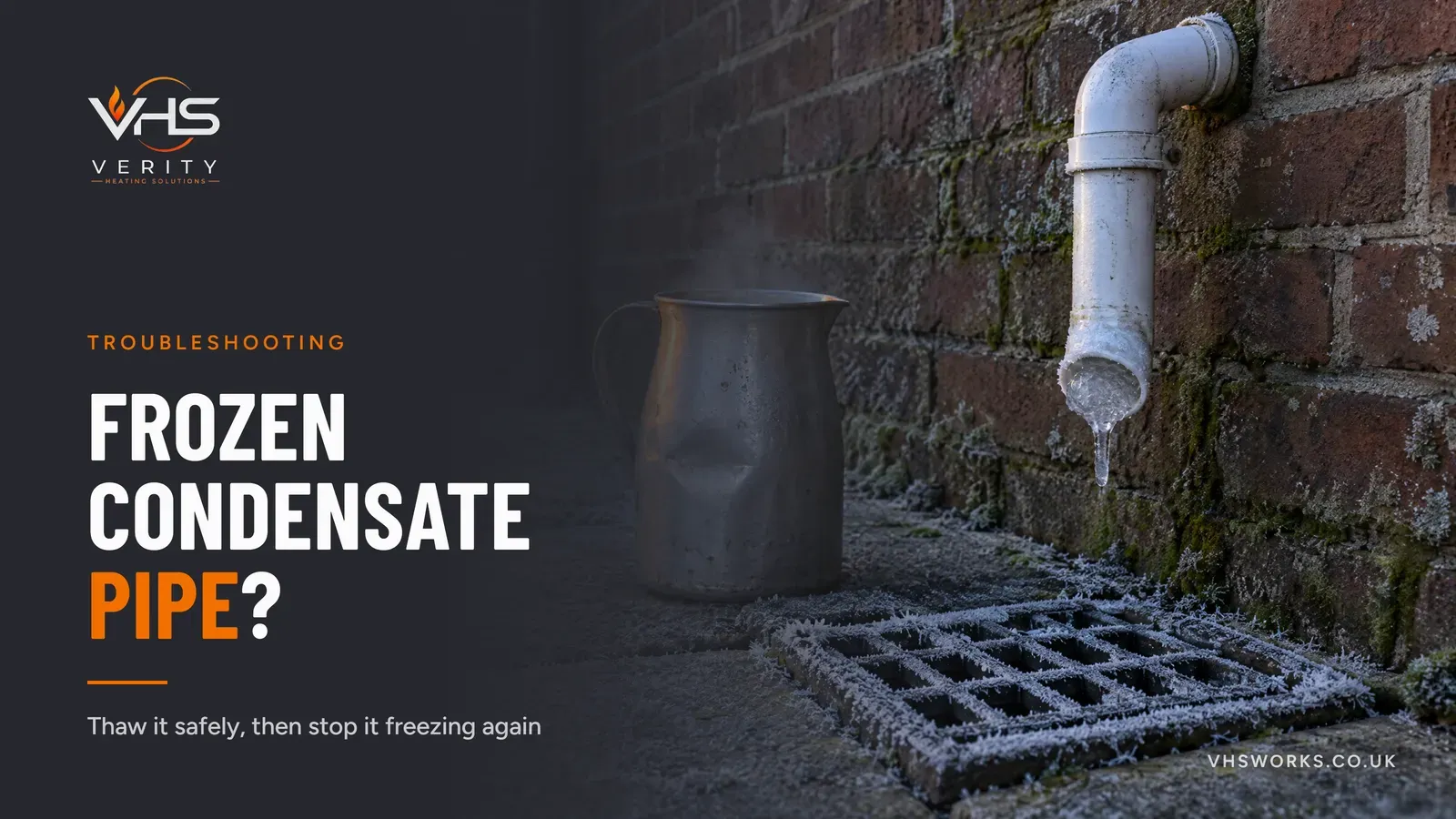
And if there's frost on the car, and the gurgle comes just before the boiler gives up and shows a fault, go outside and find the condensate pipe, the white plastic one carrying waste water away to a drain. When it freezes, the water it's meant to get rid of backs up into the boiler. There's a whole article on sorting a frozen condensate pipe safely, and it's usually something you can do yourself with a jug of warm water.
Whistling or a high-pitched whine
A whistle from the boiler usually comes back to the same causes as the gurgle and the rumble. Trapped air is the most likely culprit, but a kettling boiler can whistle too, and a pump that's wearing out can squeal or whine as it runs.
If bleeding the radiators and getting the pressure right doesn't touch it, that's the point to have it looked at rather than living with it, especially if the whine is getting louder.
Grinding, rattling or a heavy vibration
Take a grinding noise seriously straight away. It's almost always the pump, and Ideal's advice on a grinding boiler is to switch the system off and call an engineer. A pump that stops moving water properly can let the boiler overheat, so carrying on and hoping isn't a good plan.
Rattling and vibration are often less dramatic than they sound. Sometimes it's a loose part or screw inside the casing, which is one for an engineer, because you shouldn't be taking the case off a gas appliance. Sometimes it's simply a pipe clip that's worked loose, so the pipework buzzes against a wall or a floor joist when the pump runs. If you can see an exposed pipe clip that's come away, nipping it back up is fine. Anything inside the boiler itself, leave alone.
Banging pipes when you turn a tap off
If the bang happens the moment you shut a tap or turn off the shower, rather than when the heating fires up, it might not be the boiler at all. That's usually water hammer, where water rushing through the pipes gets stopped dead and the shock runs back along the pipework. It can be loud enough to make you jump, and it's more of a plumbing issue than a boiler one. Pipes that aren't clipped down properly under the floor make it much worse, because they're free to knock against the joists.
It's worth sorting, because all that knocking does joints no favours over the years, but it's not usually an emergency. Joe handles general plumbing too, so it's one call either way.
What you can do about a boiler making noise
A few simple checks clear up a good share of noisy boilers, and none of them involve opening the boiler.
- Check the pressure gauge with the system cold. If it's below 1 bar, top it up as your boiler's manual describes.
- Bleed any radiator that's cold at the top. Turn the heating off first, use a radiator key on the little valve at the top corner, and close it as soon as water starts to spit out. Then check the pressure again, because bleeding lets some of it go.
- In a freeze, check the condensate pipe outside for ice before doing anything else.
- Listen for when it happens, whether that's only as the heating comes on, only while a hot tap's running, or the moment you shut a tap off. That one detail tells an engineer a lot.
If none of that changes anything, the noise is coming from inside the boiler or the system, and that's where it needs a Gas Safe engineer rather than a YouTube video.
When to switch it off and ring today
Most noises can wait for a booked visit. A few can't. Switch the boiler off and get it looked at the same day if you hear grinding from the pump, if the noise comes with water leaking from the boiler or a pipe, or if it's getting louder by the day. And if you ever smell gas, that's not a boiler noise problem any more: open the doors and windows, turn off the supply at the gas meter if it's safe to reach (but don't go down into a cellar to do it), don't smoke or flick any light switches, and ring 0800 111 999, the free National Gas Emergency line.
Equally, a boiler that's kettling but still heating the house should just be booked in, and there's no reason to pay an emergency rate at two in the morning for it. Joe will say as much on the phone. If it'll keep safely till Monday, he'll tell you, and if it won't, his emergency boiler repair service runs 24 hours a day.
When Joe comes round to have a listen
Once Joe's found the cause, you'll hear what's wrong, what it costs and what it doesn't need. If the honest answer is a pump, you won't be sold a new boiler. If the heat exchanger is badly scaled on an old boiler, he'll tell you whether it's worth repairing at all, and the piece on repairing or replacing an old boiler covers how to weigh that up.
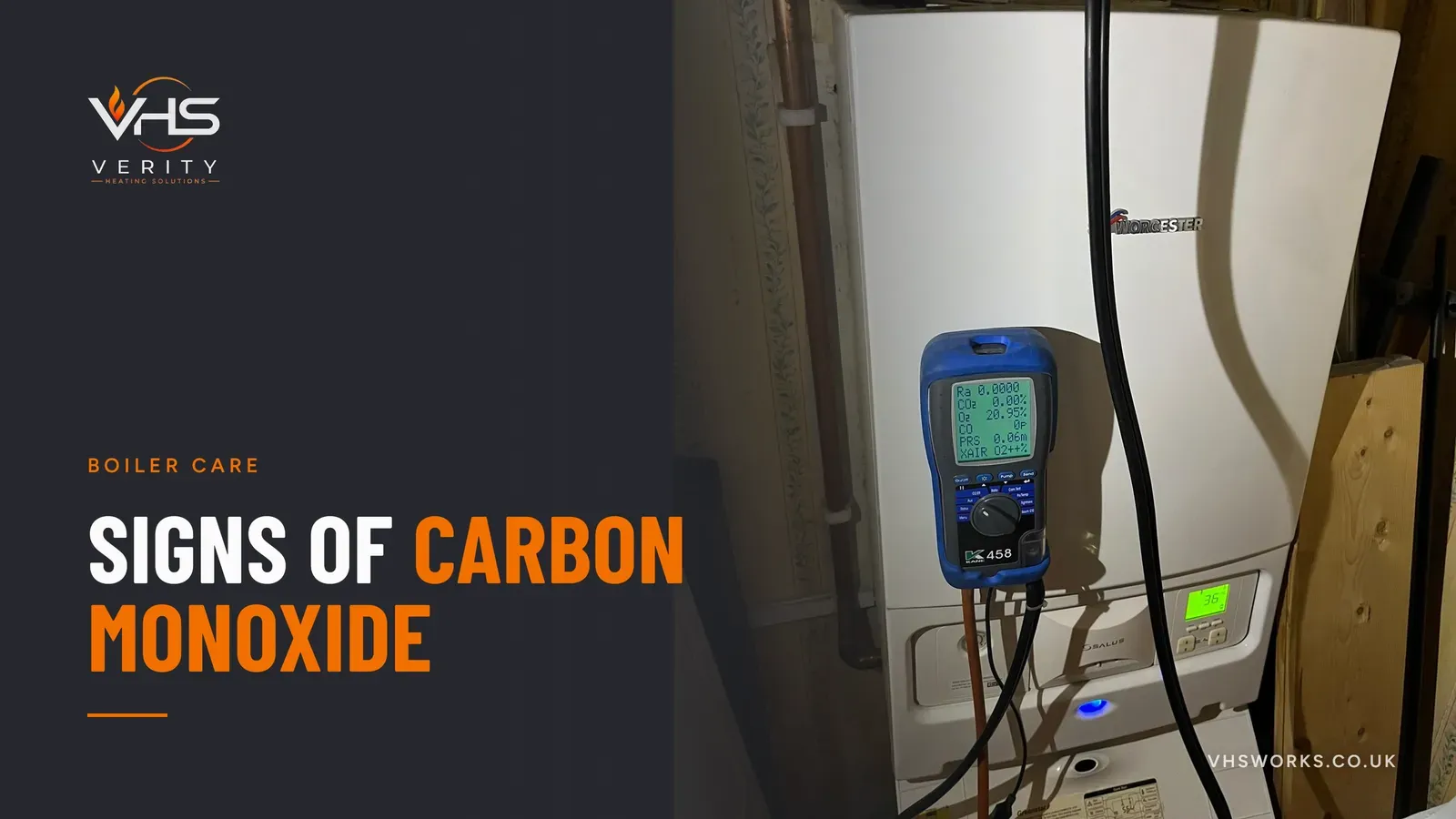
You'll know the price before a spanner comes out, and that figure won't move afterwards. Once the work's done he puts the flue gas analyser on to check the burn and shows you the boiler running, so you've seen it working properly before he goes. And because it's the same engineer from the first phone call to that last test, there's no call centre and no explaining the noise all over again to someone new.
Joe's registration is 633652, so go ahead and check us on the Gas Safe Register. If your boiler has started a noise you don't like the sound of, ring Joe on 07791 793415, which takes WhatsApp messages as well, and describe it as best you can. He'll tell you straight whether it's a boiler repair for this week or something you can stop worrying about.