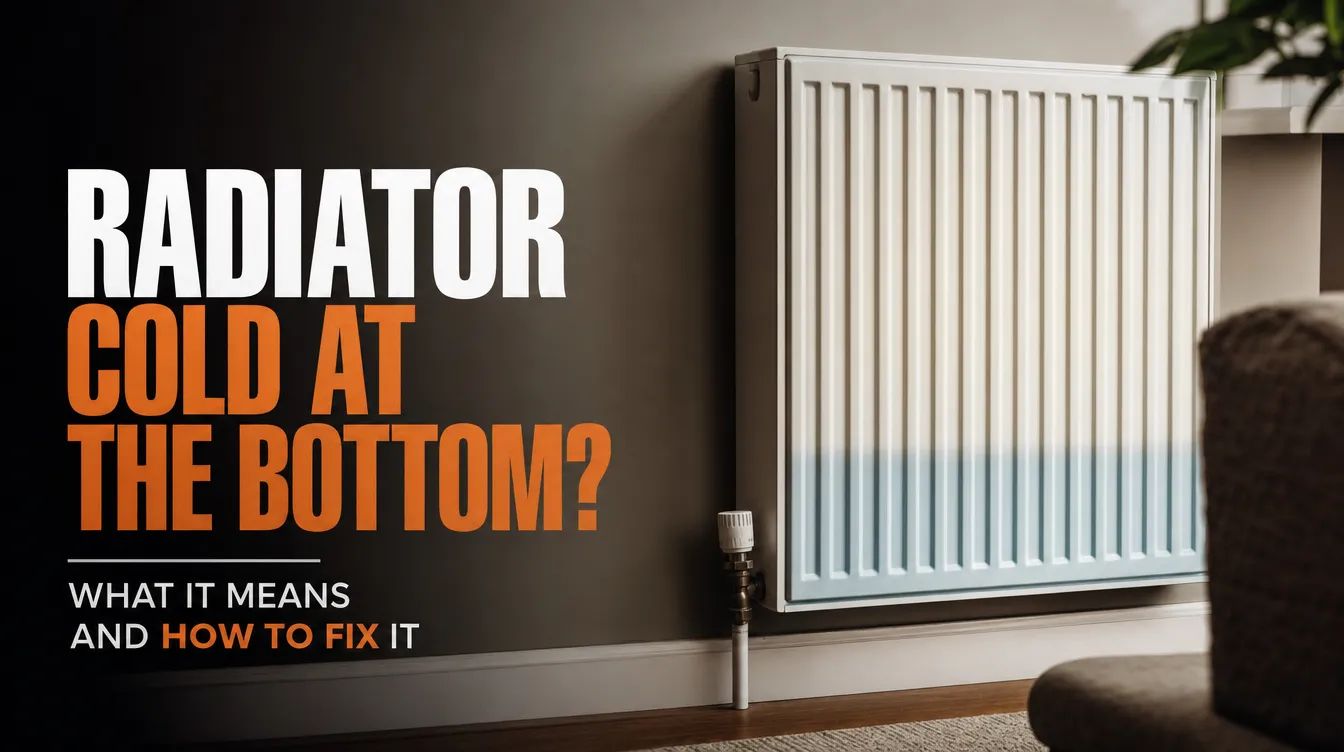
A radiator cold at the bottom and hot at the top is almost always sludge. Rust from inside the heating system has settled along the bottom of the panel, and the hot water now passes over it without warming the metal underneath. It is not trapped air, so bleeding will not help. The cure is to get the sludge out, and how big a job that is depends on how many radiators are doing it.
Before you book anything, though, check it is a fault at all. A radiator that is a bit cooler at the bottom is working exactly as it should.
Is it normal for a radiator to be cooler at the bottom?
Yes, within reason. Hot water enters a radiator, gives up its heat to the room, and leaves cooler than it arrived. On most radiators it goes in at one bottom corner, rises, and comes out at the other, so the top is always the warmest part and the bottom on the outlet side the coolest.
Modern condensing boilers are set up to make that difference bigger on purpose, because cooler water coming back to the boiler is what makes them efficient. A radiator that is hot along the top and comfortably warm along the bottom is healthy.
There is a second innocent cause. A thermostatic valve closes down as the room reaches its temperature, and the radiator runs half warm for a while. Turn the valve up to full and wait twenty minutes before you judge anything.
What is not normal is a cold patch. If the bottom of the panel, most often the middle of the bottom, is cold to the touch while the top is too hot to hold, that is the pattern this page is about.
Why is my radiator cold at the bottom and hot at the top?
Because something heavy is lying in the bottom of it. Most radiators are pressed steel, and steel in contact with water and a little oxygen rusts. The rust in a heating system is a black, gritty iron oxide called magnetite. Mixed with water it forms a sludge the texture of wet cement.
Sludge is heavier than water. It travels round the system until it reaches somewhere the flow is slow, and then it drops out. The bottom of a radiator is the slowest place there is. Over the years it builds into a bank along the base, usually thickest in the middle, and hot water simply takes the easier route over the top.
That is why the pattern is the opposite of trapped air. Air is light and collects at the top, so an airlocked radiator is cold at the top and warm below. Sludge is heavy and collects at the bottom. Bleeding lets air out and does nothing whatever to sludge.
How can you tell how bad it is?
You can learn a lot in ten minutes with the heating on and nothing but the back of your hand.
Go round every radiator. Feel along the top, then along the bottom. Note which ones have a cold patch and roughly how wide it is.
Count them. One radiator with a cold patch is a local problem. Several, especially downstairs, means the sludge is system wide.
Look at where they are. Sludge settles first in the radiators furthest from the pump and in the lowest ones. A cold patch in the downstairs back room and nowhere else is the classic early sign.
Bleed one briefly into a white cup. A few drops will do. Clear water is reassuring. Brown is rust on its way. Black means there is plenty of magnetite in circulation.
Listen to the boiler. A rumble or a kettle-like noise suggests the sludge has reached the boiler as well.
Tell Joe those five things on the phone and he can usually say which of the fixes below you are looking at before he has seen the house.
Can you fix a radiator that is cold at the bottom yourself?
If it is one radiator, often yes. Taking it off the wall and washing it out is water work, not gas work, and a careful person can do it. Be honest with yourself about the mess, because the water that comes out is black and it stains whatever it lands on.
Switch the heating off and wait until the radiators are cold.
Close the valve at each end of the radiator. On the plain end, count the turns it takes to close and write the number down. You will need it to put the valve back where it was.
Put a tray and old towels under one valve, open the bleed screw, and loosen the nut joining the valve to the radiator. Let it drain into the tray.
Undo the other end, lift the radiator off its brackets, and tip the last of the water out before you move. Carry it outside with the ends bunged or held upwards.
Run a hose through it from each end in turn until the water comes out clear. Tapping along the bottom with a rubber mallet helps shift what is stuck.
Hang it back, tighten the nuts, open both valves, giving the plain end the number of turns you wrote down, and bleed the air out.
Top the pressure back up at the boiler. The steps are in the guide to a boiler that keeps losing pressure.
Two cautions. If a valve will not close fully, or a nut will not shift, stop there. Forcing an old valve is how a small job becomes a flooded carpet. And if the radiator is a heavy double panel, get a second pair of hands, because a full one weighs far more than it looks.
When does it need a powerflush?
When the sludge is in the whole system and not just one panel. Washing out a single radiator while black water is still going round the rest only buys a year or two before it silts up again.
There are three levels of cleaning, and the right one depends on what the check above turned up:
One radiator off and hosed. Right when a single radiator is affected and the water elsewhere is fairly clean.
A chemical clean. A cleaning agent is added and left to circulate with the heating running, then the system is drained and refilled. It is gentler, and suits a system that is dirty but not blocked, or older pipework that would not thank you for a hard flush.
A powerflush. A machine drives water and cleaner round at high flow, one radiator at a time, until it runs clear. It is the thorough option for several cold radiators and black water.
Whichever level it is, the job is not finished until fresh inhibitor has gone back in. A freshly cleaned system left on plain water starts rusting again the same week.
For an ordinary house, national price guides quote a powerflush at roughly £400 to £700. That is a market figure, not Joe's quote. What the job involves, and when a flush is the wrong answer, is set out on the powerflushing page.
A flush is not always possible either. If a radiator has rust weeping from its bottom seam, it has corroded through from the inside and wants replacing. Cleaning it would only make the hole bigger.
What happens if you leave it?
Nothing dramatic at first, which is why people do. The room is a little cooler and the heating stays on a little longer to make up for it.
The cost builds quietly. A radiator half full of sludge gives out a fraction of the heat it was sized for, so the boiler runs longer to reach the same temperature. The pump works harder against the restriction. And the sludge does not stay put. Fine particles keep circulating, and the place they do the most expensive damage is inside the boiler, in the narrow waterways of the heat exchanger.
Some houses are more exposed than others. If your heating pipes are very thin, about the width of a pencil, you have what the trade calls microbore, which was popular in the 1970s and 1980s. Pipes that narrow block far sooner than standard ones, and there the next stage is a radiator that stops heating altogether.
The water you have matters too. Where it is soft, as across much of Sheffield, there is less limescale to worry about but old steel radiators corrode a little more readily, so sludge is the fault to watch for.
How do you keep a cleaned system clean?
Three things, none of them expensive.
Inhibitor. This is a chemical added to the system water that slows corrosion right down. It gets diluted every time the system is drained or topped up, and it is the first thing to go missing. The British Standard for heating system water treatment says the level should be checked every year.
A magnetic filter. Magnetite is magnetic, which is a stroke of luck. A filter with a strong magnet in it, fitted on the pipe returning to the boiler, catches the particles before they get there.
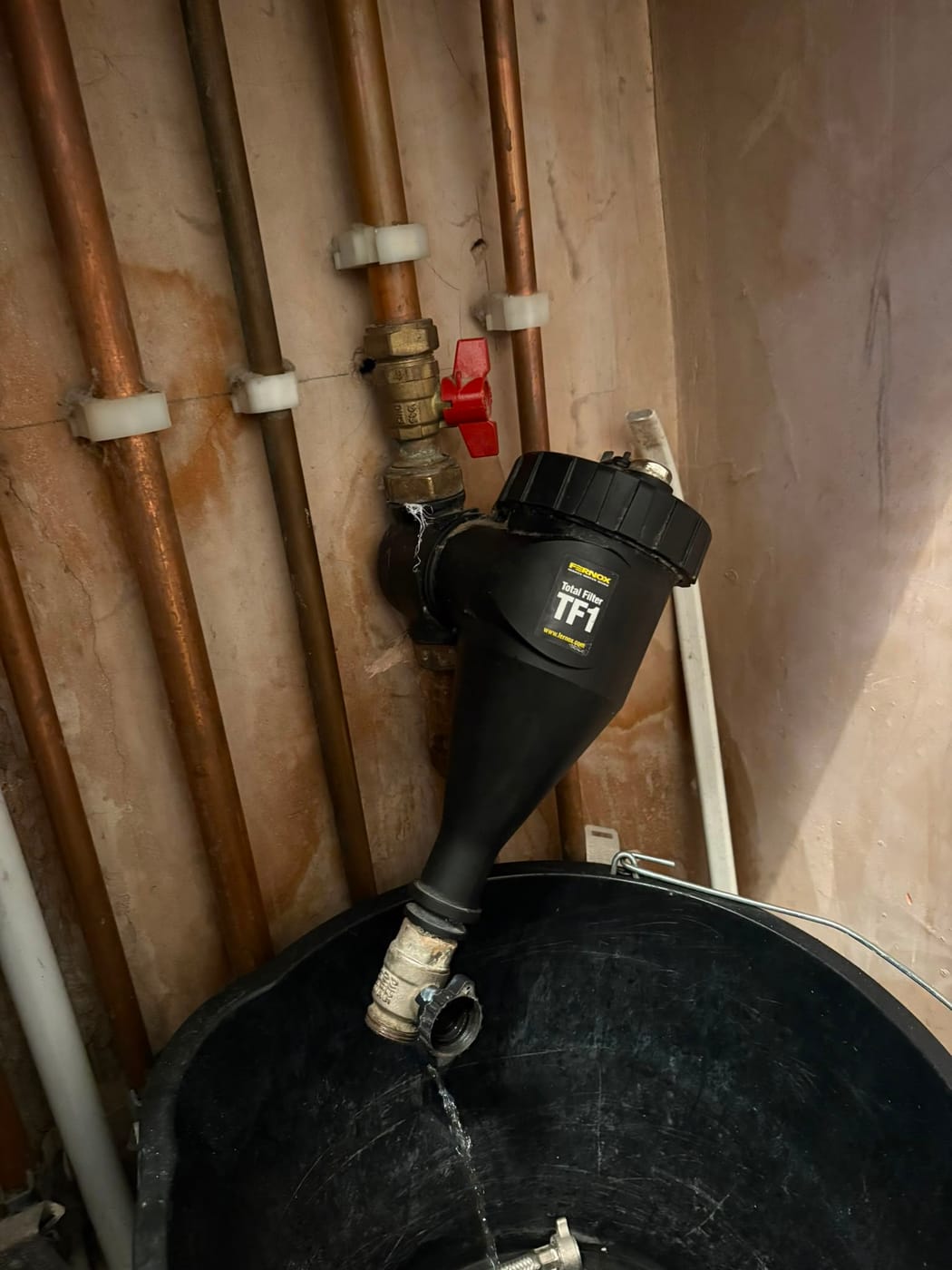
It needs emptying once a year, and the sensible time is during the annual boiler service, when the engineer is there anyway.
A system that holds its pressure. Every top-up lets in fresh water carrying oxygen, and oxygen is what rusts the steel. A system that needs topping up every few weeks is making sludge as fast as any filter can catch it. Find the leak and the sludge slows down with it.
If you have a radiator with a cold patch and would like to know which of these it needs, message Joe a photo of it or call 07791 793415. His Gas Safe registration is 633652 and he works across Barnsley and the surrounding towns. If it is a job you can do yourself on a Saturday morning, he will say so.